
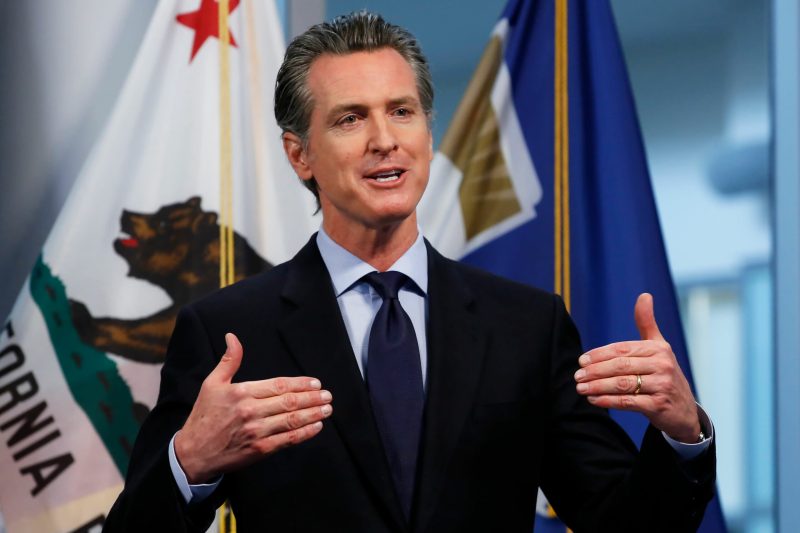
On September 30, California Governor Gavin Newsom vetoed SB 1047, a widely debated artificial intelligence (AI) safety bill. While acknowledging the bill’s good intentions, Newsom expressed concerns that it would place undue restrictions on the state’s AI sector, which could stifle innovation without effectively addressing the most pressing risks posed by the technology.
The proposed legislation, known as the Safe and Secure Innovation for Frontier Artificial Intelligence Models Act, was designed to implement stringent safety measures on AI models. Key provisions included mandatory safety testing, the introduction of a “kill switch” for AI systems, and the requirement for companies like OpenAI, Meta, and Google to submit risk mitigation plans. Additionally, the bill would have made AI developers liable to lawsuits from the state attorney general in cases where AI systems posed a continuous threat, such as a hypothetical AI grid takeover.
Governor Newsom’s Concerns
In his veto message on September 29, Newsom emphasized that the bill’s focus on regulating established AI companies would not adequately protect the public from the real threats AI poses. He argued that the proposed regulations would apply excessively strict standards to even basic AI systems, potentially hindering the state’s ability to innovate in the field.
“I do not believe this is the best approach to protecting the public from real threats posed by the technology,” Newsom said, noting that the bill’s broad scope could impede both large and emerging AI firms in Silicon Valley.
However, Newsom did agree that AI safety protocols must be implemented soon. He said he had consulted with leading AI safety experts to help California establish practical guardrails and that he had directed state agencies to enhance their analysis of AI-related risks, especially those that could lead to catastrophic events.
Despite the veto, Newsom reassured the public that his administration remains committed to AI safety, pointing out that 18 bills related to AI regulation have been signed into law over the past month.
Mixed Reactions from Tech and Political Circles
The bill sparked a range of reactions from politicians and tech industry leaders. Some, like House Speaker Nancy Pelosi and companies such as OpenAI, argued that SB 1047 would slow down AI advancements. The head of AI policy at the Abundance Institute, Neil Chilson, warned that the bill’s regulations—initially aimed at AI models costing more than $100 million—could easily expand to smaller developers, creating additional obstacles for innovation across the industry.
However, a few tech leaders expressed support for the bill. Elon Musk, CEO of Tesla and developer of the AI model “Grok,” voiced his tentative approval of SB 1047. In an August 26 post on X (formerly Twitter), Musk said that California “should probably pass the SB 1047 AI safety bill,” though he acknowledged that standing behind it was a “tough call.”
What’s Next for AI Safety in California?
Though SB 1047 has been vetoed, Governor Newsom and other state officials remain focused on establishing practical, science-based safety measures for AI. The governor’s decision reflects the challenges of balancing innovation with regulation, particularly as AI continues to evolve at a rapid pace. California’s approach to AI safety will likely continue to develop as the state seeks to lead in both technological advancement and public protection.
