
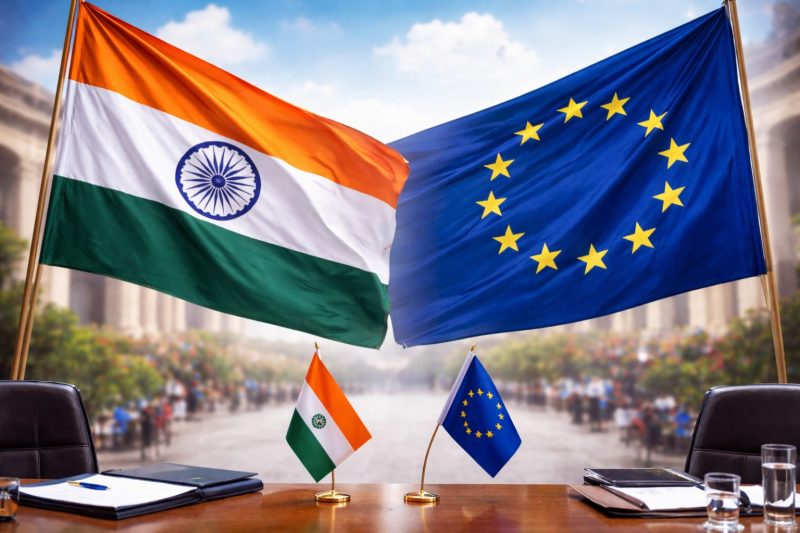
After nearly two decades of on-and-off talks, India and the European Union have officially sealed a historic free trade agreement. Leaders confirmed the breakthrough on January 27, 2026, during a high-level summit at Hyderabad House in New Delhi. Both sides called the pact a turning point that could reshape global trade ties and long-term economic cooperation
Indian Prime Minister Narendra Modi described the deal as a defining step forward, while European Commission President Ursula von der Leyen labeled it the “mother of all deals.” Together, the partners aim to create one of the world’s largest free trade zones, reaching nearly two billion people and covering about one-third of global trade.
What the Trade Agreement Covers
The agreement removes or lowers tariffs on most goods traded between India and the EU. As a result, businesses on both sides expect smoother market access and lower costs. According to official estimates, tariff reductions will apply to over 96 percent of European exports to India, with similar benefits for Indian goods entering Europe.
Key sectors expected to gain include:
- Textiles, gems, and leather goods from India
- Chemicals and a wide range of services
- European exports such as cars, machinery, wine, and pharmaceuticals
One standout feature involves the auto industry. Import duties on European-made cars will drop sharply, from about 110 percent to near 10 percent under specific quotas. Therefore, analysts expect a noticeable rise in vehicle trade over time.
Safeguards and Strategic Impact
Despite broad liberalization, both sides included protections for sensitive areas. Certain agricultural products, dairy items, and smaller vehicles will keep safeguards to shield domestic producers. Furthermore, implementation will roll out gradually and still requires approval from the European Parliament, EU member states, and India’s cabinet.
Beyond economics, the agreement signals a deeper strategic alignment. Leaders also discussed defense cooperation, digital trade, and supply chain resilience. Many observers view the deal as a joint response to growing global trade protectionism and shifting geopolitical pressures.
Overall, the EU-India free trade agreement marks a major step toward closer economic and strategic ties, with long-term implications for global markets.
