
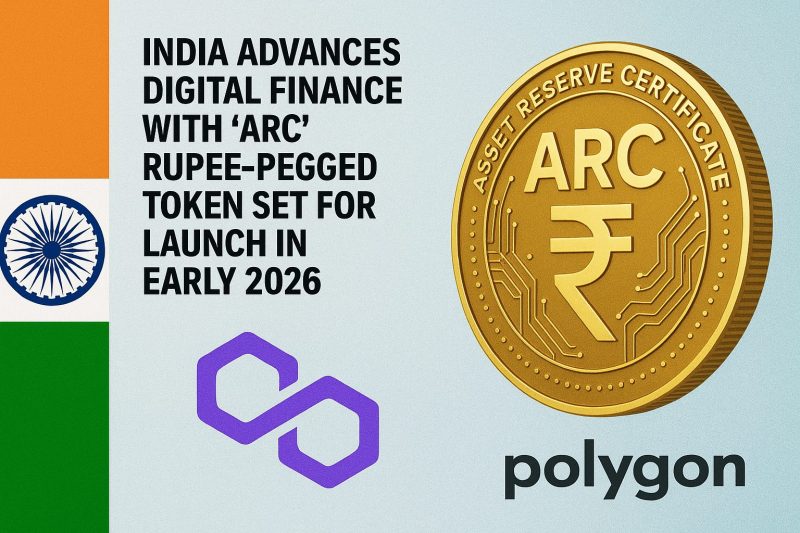
India is preparing to introduce a new digital asset known as the Asset Reserve Certificate, or ARC. The rupee-pegged token is being developed with Polygon Labs and Bengaluru-based Anq Finance, and officials expect an early 2026 launch. ARC is designed to sit beside the Digital Rupee rather than replace it, giving India another tool to modernize payments while keeping its monetary system anchored to sovereign assets.
How ARC Will Work
ARC will mirror the value of the Indian rupee on a one-to-one basis. Issuers plan to mint the token only when they receive matching cash or approved cash-equivalents. These reserves will draw from instruments such as:
- Indian Government Securities
- Treasury Bills
- Fixed deposits and similar holdings
Because ARC relies entirely on Indian sovereign backing, it avoids exposure to foreign currencies. This structure helps India keep digital liquidity within its own financial system and offers an alternative to dollar-based stablecoins, which have become a common destination for capital leaving emerging markets.
India’s Twin-Rupee Architecture
India wants to build a dual-layer digital ecosystem. The Digital Rupee, issued by the Reserve Bank of India, will act as the settlement layer. ARC, meanwhile, will serve as a programmable payments layer, operated by regulated private companies. This approach gives businesses and developers room to innovate without shifting control of the monetary base away from the central bank.
Officials see the model as a way to encourage digital payments while preventing outflows into foreign stablecoins. However, the plan has sparked debate. Crypto advocates argue that ARC may prioritize regulatory control over decentralization, raising questions about how “digital” or “open” the token will truly be.
If ARC launches on schedule in early 2026, it could become a key part of India’s broader digital finance strategy. Supporters believe it may strengthen domestic bond markets, reduce capital flight, and promote new payment tools. Still, ARC’s real impact will depend on regulatory clarity, adoption by private enterprises, and the readiness of supporting infrastructure.
Many global observers are watching closely. ARC may offer a template for other emerging economies seeking regulated, sovereign-backed stablecoins. On the other hand, challenges in building trust or executing the rollout could limit its influence and slow adoption.
