
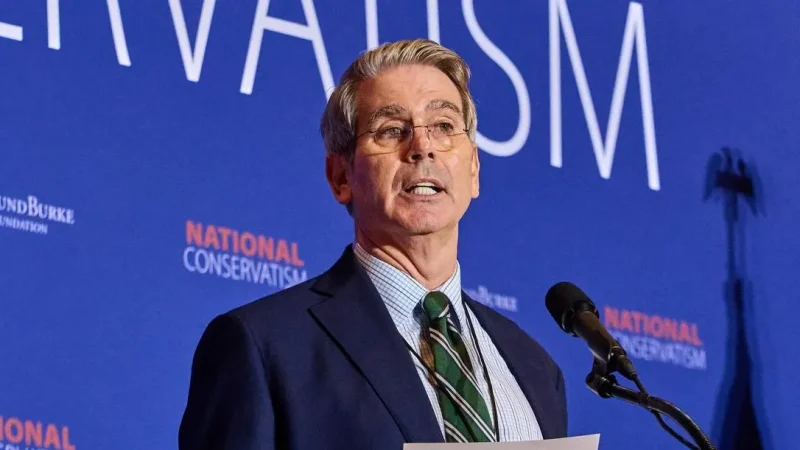
Treasury Secretary Scott Bessent is urging the U.S. Senate to advance the CLARITY Act, warning that failure to move the legislation could weaken America’s position in the digital asset industry and limit national security tools.
Bessent renewed his appeal as lawmakers prepare for a key procedural vote expected on September 15. The legislation would establish a federal framework for digital assets and clarify the roles of the Securities and Exchange Commission and Commodity Futures Trading Commission.
Senate Faces Critical Crypto Test
Bessent called on senators to remain at the negotiating table and agree to move the bill forward. He warned that abandoning the effort could send a troubling signal to U.S. allies and adversaries.
The Treasury secretary also tied crypto regulation to national security. He argued that clearer rules would improve the government’s ability to prevent bad actors from exploiting digital asset technologies.
The Senate vote carries significant stakes because the bill needs 60 votes to advance. Democrats and some Republicans have raised concerns about consumer protections, ethics provisions, stablecoin rewards and potential effects on traditional banks.
Industry and Banking Groups Clash
The crypto industry has intensified its lobbying campaign ahead of the vote. Advocates argue that regulatory uncertainty could push companies, investment and technological talent overseas.
Banking groups, however, remain concerned about provisions that could allow stablecoin issuers to compete more directly with bank deposits. Critics have also pressed lawmakers to strengthen safeguards against illicit finance and other risks.
The CLARITY Act has already advanced through significant congressional negotiations, but disagreements continue to threaten its progress. Supporters say the legislation could provide long-awaited certainty for the U.S. crypto market.
With the September vote approaching, Bessent’s intervention adds pressure on senators to reach a compromise. The outcome could determine whether the United States takes another major step toward comprehensive cryptocurrency regulation this year.
