
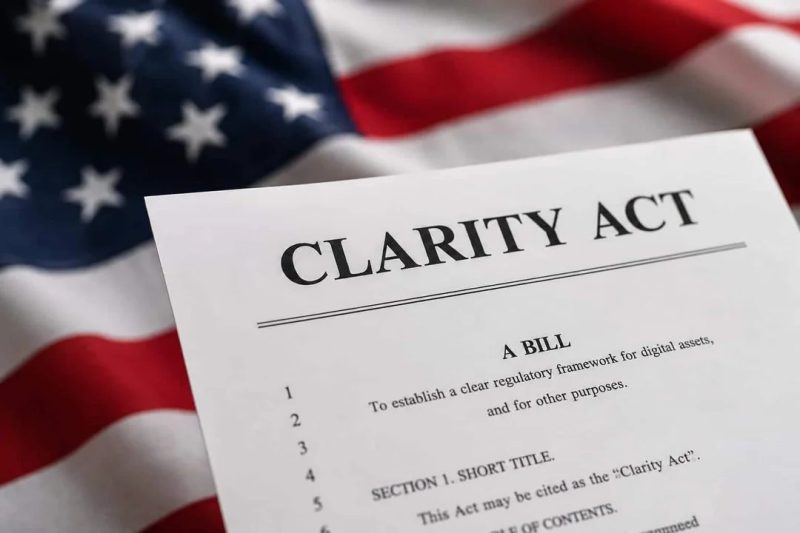
Senate Republicans have released what they are calling their “last, best and final” offer on the CLARITY Act, with President Donald Trump accepting most of a bipartisan proposal aimed at addressing conflicts of interest tied to crypto. The move comes one day before senators face a crucial procedural vote on the sweeping digital-asset market structure bill.
The latest proposal reflects roughly 80% of an ethics framework negotiated by Republican Sen. Thom Tillis and Democratic Sen. Ruben Gallego. The changes could improve the bill’s chances of winning the 60 votes needed to advance in the Senate, although Democratic support remains uncertain.
Ethics Deal Targets Crypto Conflicts
The revised ethics language would impose new restrictions on senior federal officials and their spouses. It also addresses Trump’s substantial crypto interests, including requirements that could force officials to divest significant digital-asset holdings or place them in blind trusts.
A key change gives state attorneys general a role in enforcing the restrictions. That provision had previously faced resistance from the White House. Republicans now say Trump has accepted the broader framework as lawmakers attempt to secure bipartisan backing.
The dispute has centered on whether the legislation provides enough protection against conflicts involving Trump and other officials while still allowing the broader crypto market framework to move forward.
Senate Vote Puts Crypto Regulation at Risk
The Senate is scheduled to hold a cloture vote Tuesday, Sept. 15. Republicans control 53 seats, meaning they need Democratic support to reach the 60-vote threshold.
The CLARITY Act would establish a federal regulatory framework for digital assets and divide oversight between the Securities and Exchange Commission and Commodity Futures Trading Commission. The latest draft also contains changes involving decentralized finance, stablecoin rewards and banking-related concerns.
However, several Democrats have continued to demand stronger safeguards on ethics, money laundering and consumer protection. Banking groups have also opposed parts of the stablecoin provisions, arguing they could encourage deposits to move away from community banks.
The final ethics compromise could therefore determine whether the CLARITY Act advances or stalls. With the midterm elections approaching, lawmakers have a narrowing window to complete one of the most consequential crypto bills considered by Congress.
